Let’s Actually LOOK at Our Market

Any statistic is only valuable if it has been properly evaluated.  A tremendous amount of “information” gets printed and repeated.  Much of it is false or just plain silly.  Various economists make predictions about “the recovery” of the real estate market.  What is the definition of “the recovery”?  What exactly would one see if it “had recovered”?

RANK YEAR MLS UNITS SOLD EQUITY SELLER REO  CASH
           
# 1 2005 104,133 99% 0.42% 12%
# 2 2004 98,294 98.4% 1.66% 13.5%
# 3 2009 91,757 30% 56.00% 37%
# 4 2010 90,408 37% 41.30% 42%
# 5 2003 79,512 98% 1.99% 13.5%
# 6 2006 74,105 99% 0.18% 9.2%
# 7 2002 68,411 98% 1.65% 14%
# 8 2001 62,523 98.7% 1.30% 16.5%
# 9 2008 59,220 64% 34.50% 21%
# 10 2007 54,231 96.7% 3.30% 11.6%

On the chart you see here note that the highest sales year in history was 2005.  The second best year ever was 2004.  Take just a moment to observe that last year, 2010 was the fourth best year ever for number of homes sold.  Also, notice the relative number of sales starting with the record breaking number of 79,512 homes sold in 2003.  Look at how last year (90,408 closed sales in the MLS) compares to the other top years.

So, what is different or “bad” about our current market?  Well I suppose it would depend on who you ask.  If you ask the hoards of investors currently paying cash what is “bad” you would get a very different answer than if you asked a home seller (a whopping 42% of all sales in 2010 were cash buyers, mostly buying bank foreclosures).  What is good or bad is “price”.  What you see on the chart is that the REO (Real Estate Owned – commonly called foreclosures) category just a few short years ago was almost non-existent and last year the bank owned houses composed 42% of all the sales (that number for 2009 was even higher, 56% for the year).  When the percentage of cash sales rises way above 12 – 14% there is a reason:  heavy investor buying.  Currently investors are a huge component of our market due to the current low prices.

Notice that we now have a category called “Equity Seller”.  Just a few short years ago, these people were just called “sellers”.  The category “short sales” so recently entered our MLS data that we have eliminated it as a category – although it would tend to mirror the REO pattern.

Here are some interesting points on the market from the Cromford Report: “Segmenting by price range we still see the greatest weakness below $100,000 where supply is very high and additional REO supply may be looming as trustees process the backlog from Bank of America’s hiatus last quarter.  Even here the situation is much improved because buying activity has accelerated as the pricing has fallen.  The strongest price range is currently $400,000 to $800,000 where sales prices have stabilized and even moved very slightly higher over the last four months when measured by price per sq.ft.”

After unusually low foreclosure numbers in November and December (due to seasonal moratoriums and Bank of America’s temporary halting of foreclosures) the numbers reverted back to normal levels with 6,783 new notices and 4,585 trustee deeds recorded.  The net effect was to reduce the number of pending foreclosures to fewer than 40,000 for the first time since March 2009.

Add in to the mix of all this, the government’s proposal to eliminate Fannie Mae and Freddie Mac – or at a minimum move it back to the private sector.  This is a bit like locking the barn door after the horse has bolted – but change is warranted and inevitable.  Whatever the change, it will no doubt result in a rise in interest rates as less money is available for lending.  Rising rates impact affordability and could create downward pressure on pricing.  Our hopes are that the change will be implemented gradually to minimize the damage and allow the private sector to fill the gap left by these lending giants.

As always this market continues to provide plenty of topics for the water cooler.  We will continue to share the trends as they appear.  Please call us with your thoughts or concerns.  We are here to help.

Russell & Wendy Shaw

Market Trends

It is with some fascination that we continue to watch the local real estate market as it continues its predictable pattern for unpredictability.  Forecasting has been largely abandoned, replaced by tracking the immediate history.  So where do we stand today (for those who simply want us to bottom line the market conditions, skip to the end of this article).

The market hit bottom in April 2009 (at least in the under 250K range).  From that point, speculation was raised of whether the worst was over or if in fact a “double dip” was in the offing. The market began a slight recovery phase with the first time homebuyer tax credit – which stimulated the demand for real estate through mid-2010 and made great headway in consuming the over supply that had so badly harmed pricing. Pricing began to firm and we pondered if the first leg of recovery had begun or not. Some 20 months later after the “bottom” was established, the double dip has arrived.  But as is consistent with our market for the last few years, it presents some interesting dynamics (some might say schizophrenic).

For the monthly period ending January 15, the price per square foot averaged $82.16 per square foot for all areas and types – down 1.3% from $83.20 on December 16.  Pending sales price per square foot seems to suggest further drops in sales prices ahead.

It is clear that we have now fallen below the April 2009 levels and overall prices are trending lower still. However the detailed picture is more complex than appears at first sight.

First, pricing for normal sales (not short sales or foreclosures) has actually strengthened over the last three months, from an average of $106 per sq. ft. in October to around $112 in January.  You read that correctly, normal sales have strengthened slightly.  While this would appear to be a cause for celebration, this improvement in normal sales pricing has little effect on the overall average because normal sales only constitute 28.4% of sales.

Short sales, not surprisingly after the foreclosure festival held by the lenders this summer, currently compose only 21.1% of the closings.  The lion’s share of the closings (and gaining) is the REO properties (bank foreclosures).  The pricing of short sales and foreclosures has been particularly weak in the last six weeks, falling from $82.78 on November 30th to $77.45 on January 16th. That’s a 6.4% drop in just 7 weeks and is the primary cause of the overall fall in prices. Sales pricing for REOs has remained virtually unchanged at $63.70 over the same 7 weeks, but this also negatively affects the averages because REO market share has increased from 47.6% to 50.4% in the same period. Increased market share of foreclosures rarely bodes well for pricing.

Price behavior also varies by dwelling type. Over the last six months we see the following:

Monthly Average $/SF for: July 16, 2010 Jan 16, 2011 Change
Single Family – Detached $89.98 $81.85 -9.0%
Apartment Style / Flat $94.69 $88.94 -6.1%
Townhouse $80.72 $73.26 -9.2%
Gemini / Twin $69.05 $65.74 -4.8%
Patio Home $121.47 $102.21 -15.9%
Mobile / Manufactured $34.99 $33.66 -3.8%


So we see a less than cheery picture for sales pricing and no sign of any improvement in the next four to six weeks. In fact we see continued deterioration. But we are not overly concerned about this since sales pricing is a trailing indicator of the market and is the last thing to reflect any turnaround. When we look at other measurements things are not so gloomy. This is because lower pricing results in increased demand which is certainly making its presence known at the moment.

In short, prices are down, activity is up.  The current monthly sales rate and the number of pending listings are both very strong for this time of year, while active listings have declined over the last two months. All of these signs suggest a strengthening market. This gathering strength is still unlikely to be reflected in sales prices for several months, but it does look as though the spring buying season will be very busy in 2011. It will take more than one spring season to generate a market recovery. However it does mean that the downward pressure on pricing is starting to ease.

So 2011 is off to a bumpy but busy start.  Our thanks to Mike Orr of the Cromford report for the numbers and inspiration for this article.  As always, we will continue to track the market and share our findings with you. 

 Russell & Wendy Shaw

Milestones Charter School is holding their 2nd Annual Holiday Craft Fair & Bazaar

Phoenix: On Saturday, November 6th, Milestones Charter School is holding their 2nd Annual Holiday Craft Fair & Bazaar, while their neighbor, New Vision Center for Spiritual Living is holding their Annual Pet Blessing and Adoption Fair.

The Bazaar will be held from 9:00 am to 1:00 pm and will feature dozens of vendors offering unique holiday gifts, from handbags to wearable art;  photography prints to hand-made children’s apparel.

The Pet Blessing and Adoption Fair will be held from 10:00 am to 3:00 pm and will offer pet blessings, adoptions and fostering of a variety of animals, as well as special appearances by Pet Communicators.

The Holiday Bazaar will be held in the lot adjacent to the Milestones Charter School 4707 E. Robert E. Lee and New Vision Center for Spiritual Living, while the Pet Blessing will be held at New Vision Center’s buildings at 18010 N. Tatum Blvd. Both are located across from Moon Valley Nursery on Tatum Boulevard (between Bell & the 101) in Phoenix.

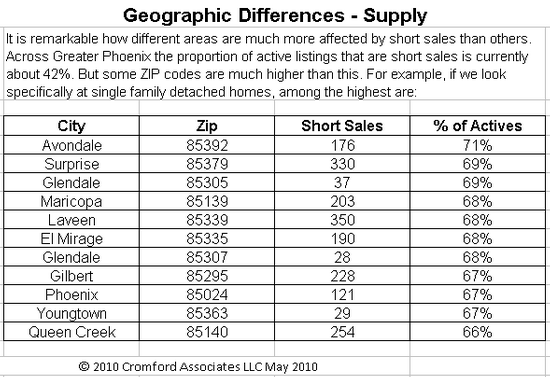
Short Sales vs. Bank Owned?

My, what a difference a year makes. In late 2008 lenders, as well as industry giants Fannie Mae and Freddie Mac dominated both the active listings and sales statistics with their foreclosure inventory. Rumors abounded about an additional looming “shadow inventory” of foreclosures which would further destroy our already decimated marketplace. The oncoming “foreclosure tsunami” was spoken of as a certainty. Fast forward to 2010 and one is met with a very different scenario than predicted. Thanks to the in-depth research done by Mike Orr at the Cromford Report we know all those industry “visionaries” were mistaken. In reality, the foreclosure (REO) market appears to have peaked in the first half of 2009. Since then the tide has steadily continued to turn from a foreclosure dominated market to a short sale market. Why?

Lenders have finally determined that an effective short sale process usually reduces their investor’s losses compared with foreclosure. In fact, one bank’s study showed an average savings of $38,000 on a short sale vs. a foreclosure. Additionally, new government incentives are now in place for lenders which reward short sales over trustee sales. For these and other reasons, many lenders are refining their short sale processes and making faster and better decisions.

Buyers have increased their willingness to buy short sales. Benefits to buyers include the reduced competition for short sales vs. REOs – as well as the ability to purchase with financing instead of the cash which REOs so often demand. Despite the patience required to wait out the months long short sale process, buyers can obtain homes generally in far superior condition to REOs and usually within 1-2% of the cost of an REO. In short, buyers have wisened to the value proposition short sales offer.

Sellers. A large proportion of homes in the valley have negative equity as most sellers either purchased after 2002 or have refinanced. Owners wishing to sell in this circumstance either need to bring extra money to the close of escrow or must attempt a short sale. The latter option is by far the most popular with sellers for obvious reasons. Therefore, short sales comprise an increasing share of the active listings while lender-owned homes are on a downward trend. While the total number of active listings has fallen by 23% since January 2009, the number of short sales offered for sale has grown by 50%.

Sellers have finally accepted that a short sale’s impact on credit ratings will usually be less than in a foreclosure. Additionally a new government program released on April 5th HAFA (Housing Made Affordable Foreclosure Alternatives) offers qualifying sellers cash incentives of up to $3000 to participate in a short sale.

We can see that short sale listings are most dominant in certain low to medium priced areas with a high proportion of new homes – particularly in the west valley. They are least prevalent in high priced areas and in those targeted at the over-55 market, where normal sales are still the majority. It is not the outlying location that is important, since we see that Rio Verde, Gold Canyon and Wickenburg are all near the bottom of the short sale league. It is not necessarily the cheapest areas either, since some of the lowest priced areas of the valley, such as parts of west and south Phoenix, show pretty ordinary rates of short sale listings (e.g. 85009 -34%, 85033 -39%). Homes in these areas are more likely to be foreclosed without an attempt at a short sale.

Conclusions

The end of the REO market is certainly not here yet but in the last few months we have seen a significant drop in the flow of new Notices of Trustee Sales suggesting that REO inventory will fall back to more normal levels over the next two to three years.

However the situation that creates short sales (negative equity will not be a quick fix. It seems very unlikely that Phoenix real estate will more than double in price anytime soon, which it would have to do to match the peak price levels seen in mid 2006 and eliminate all the negative equity created by the subsequent collapse. It also seems unlikely that sellers bringing cash to the closing table is going to ever become a popular option. So for now, and for the foreseeable future, short sales are here to stay.

Thanks to Mike Orr for what is really the heart and soul of this article.

Wendy & Russell Shaw

Should You Buy A Short Sale Listing?

It depends. There are definite advantages to buying a short sale listing. There are also definite disadvantages. And there are some possible additional disadvantages – depending on which agent you have.

We will take these up – one at a time.

Advantages: Price and Condition. If the transaction is handled correctly, you can usually get much more home for the money than you could get otherwise. For about the same price as a lender owned home, you can buy a short sale home in MUCH better condition.

Disadvantages: Time and Certainty. You don’t have to talk to a lot of people to find some who will tell you to NEVER BUY A SHORT SALE. It takes forever and you don’t know if the bank will ever get back to you. That can be a true statement. It can also be a false statement. This “disadvantage” is largely dependant on the point below.

Possible Additional Disadvantage: Incompetent listing agent. This is probably the single biggest variable currently. If the listing agent knows what they are doing (and many listing agents do a wonderful job in this area) communication to the bank is effective and efficient. If they don’t have experience, pricing is at a level no bank will approve, communications with the bank breakdown, and the file may straggle on for 6 or more months only to be denied.

How does a buyer combat this final disadvantage? Know your agent and make sure they have an interview sheet for the listing agent so they can determine the probability of a successful close. While this is no guarantee, it is possible to significantly jump your odds of obtaining the short sale home of your dreams.

A Late Christmas Gift For You

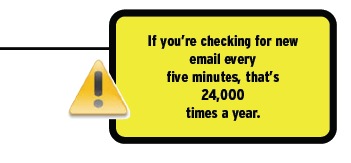
checking for email

I haven’t been blogging much lately (for some months) and needed an easy one to get myself started again.  The gift to me is being able to post this here now.  The gift to you is a really (really really) cool book from Seth Godin you can download for free, here.

I think you will really like it.  I know I have.

Merry Christmas to everyone!

Calling all crafty parents and kids!

Milestones is hosting a Craft Fair & Bazaar on Saturday, November 7, 2009arts and crafts

from 9am ~ 12pm

We are looking for vendors with all types of items:

Scrapbooking, Clothing, Accessories, Home décor, Sports Memorabilia, Jewelry or Art.

If you have an interest in being a part of MILESTONES CHARTER SCHOOL Craft Fair & Bazaar Please contact:

Jamie (Mrs. J / 4th) ord4phx@yahoo.com

  • Space in on a first come first served basis
  • Spaces will be the size of 2 parking spots

(electricity is not available)

  • Rental fee is $20 per space
  • Each vendor is responsible for set-up and break-down

(no earlier than 8am – no later than 1pm)

  • If you have an idea as a vendor, contact Jamie

Market Stats Update

For the past five or six years (very much unlike my first 20 – 25 years in the real estate business) the price of Phoenix residential real estate has been front page news and sometimes even national news.  What you will see here aren’t the glaring headlines – that all sound so much better than my title for this post – but actual stats.  Hopefully, seeing them will help you to have a more accurate idea of what is happening.UpstatGraph

1.  July residential resale properties were over 9,000 for the 3rd month in a row.  You would have to go clear back to 2005 to find sales success like that.

2.  The trend for the median sales price (the middle point, half of all sales are below this number and half of all sales are above it) is overall, rising.  It is currently at 125k.  Last April it was 116k.

3.  The average (or mean) sales price is up to 175k.  March of 2009 it was 159k.

Foreclosures Surge?

This was just now posted on AzCentral with the headline, "Foreclosures surged in July.  This is what passes for "reporting" by most media about the real estate market.  June foreclosures were 5,149.  July’s numbers (per the article) were 5,316.  A difference of 167 foreclosures or 3.24%.  And that is being called a "surge".marketStats

I wonder if anyone’s paycheck went up at an annual rate of 3.24% they would ever consider it a surge?

This isn’t to suggest that the number of foreclosures going up is ever a good thing – just that reading past the headlines and actually looking at the numbers might shed a bit of light on the subject.

If anyone cared to truly examine some relevant market statistics for the Greater Phoenix area here are a couple I personally find quite interesting: The current "success rate" for all listings in ARMLS is 64.8%.  You can see that (along with some other very interesting numbers) here.  But since most of the sales occurring are lender owned properties, that number doesn’t mean too much to me.  Let’s break it down.

Scroll down on this page and you will see the breakdown, based on types of listings.  The success rate (percent of all listings of that type that sell) for lender owned is 91.4%.  Not very surprising – at least not in our market.  But look at the comparison between "normal listings" and short sales.  The numbers are almost the same!  Normal listings success rate is 50.2% and short sales success rate is 49.4%.

I know, I know, the normal listings stat surged way ahead. 🙂

8,000 Reasons

After a false start, details of the new program that allows home buyers to use the first time home buyer tax credit at closing have finally been released here.  Here are the major points:

The program can only be used on FHA-insured loans.  VA, conventional, and other programs are not included.8000

The credit cannot be used towards the required 3.5% down payment.  Closing costs, mortgage discount / origination point(s), and other closing costs can be covered by the credit.

So although you can’t get your new home with no money out of pocket, you can use the credit to “buy down” your mortgage interest rate and/or even possibly negotiate a lower price on the home by minimizing the amount of money you would have to ask for from the seller for closing cost assistance.

This is very good news!